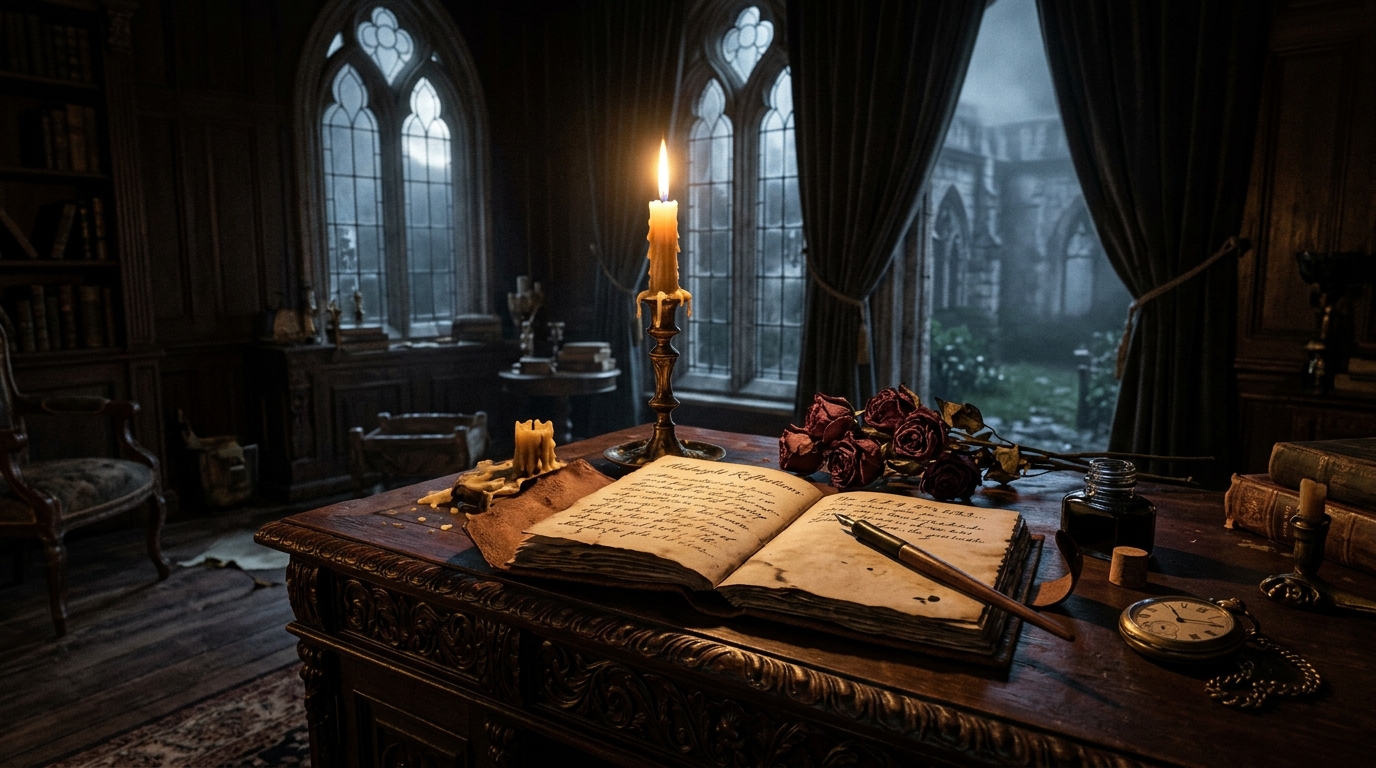
In the corner of my study stands an oak bookcase filled with volumes that smell of dry paper, animal glue, and aged leather. Many of these books were bought for fifty cents at rural estate sales across the Westman area—salvaged from old parlor boxes and estate auctions in Minnedosa, Souris, and Neepawa.
When you open a volume of Marcus Aurelius printed in 1904 or an antique collection of Edgar Allan Poe’s tales bound in dark cloth, you are never alone.
You are entering a conversation with the dead.
The Magic of Secondhand Marginalia
New books printed on bleached, odorless paper feel sterile. They are blank slates devoid of history.
An old book, however, possesses a ghost.
Inside an 1898 edition of Thomas Browne’s Urn Burial, I found a faint pencil inscription in the margin beside a passage on the shortness of mortal memory:
“How true this strikes on a November evening. — H.M., 1912”
Who was H.M.? Did he sit in a drafty farmhouse somewhere on the Manitoba plains over a century ago, listening to the same howling prairie wind while candlelight cast shadows on his wall? Did he fear death? What became of his hopes, his griefs, his unrecorded days?
The author of the book had been dead for three centuries when H.M. read those words. Now H.M. has been dust for over a hundred years. Yet across that unimaginable chasm of time, through the fragile alchemy of carbon ink on rag paper, our minds touched for an instant in the margins.
There is no digital medium on earth capable of that degree of haunting intimacy.
The Ritual of Nocturnal Reading
Reading during the day is an act of information consumption. We scan, we skim, we search for takeaways to deploy in conversation or apply to projects.
Reading at midnight is an act of communion.
By candlelight, words do not strike the eye as mere data points. They resonate like incantations. When reading Emil Cioran, Arthur Schopenhauer, or the dark gothic lyrics of Baudelaire in the deep quiet of 2:00 AM, their melancholy does not depress you—it consoles you.
It tells you that the isolation you feel, the strange grief at the passing of autumn, the yearning for something eternal amidst a transient world—these are not defects of your mind. They are the universal hallmarks of being conscious in an immense, unanswering universe.
Preserving the Physical Page
In my workshop, when I re-bind an old volume whose spine has disintegrated:
- I sew the folded signatures onto linen cords using unbleached flax thread.
- I line the spine with mull cloth and animal hide glue.
- I wrap the boards in vegetable-tanned goat skin or dark bookcloth, pressing it under cast-iron weights until set.
It is quiet, slow work. But when you place the restored volume back onto the shelf, you have granted another century of life to thoughts that deserve to outlast our fleeting digital age.
May there always be dark rooms, single candles, and heavy books to welcome the solitary wanderer.